
Accumulation conveyors
We build stainless steel accumulation tables and conveyors for cans, bottles and jars. They buffer product between the filler, labeller and packer, so a short stop at one machine does not stop the whole line.
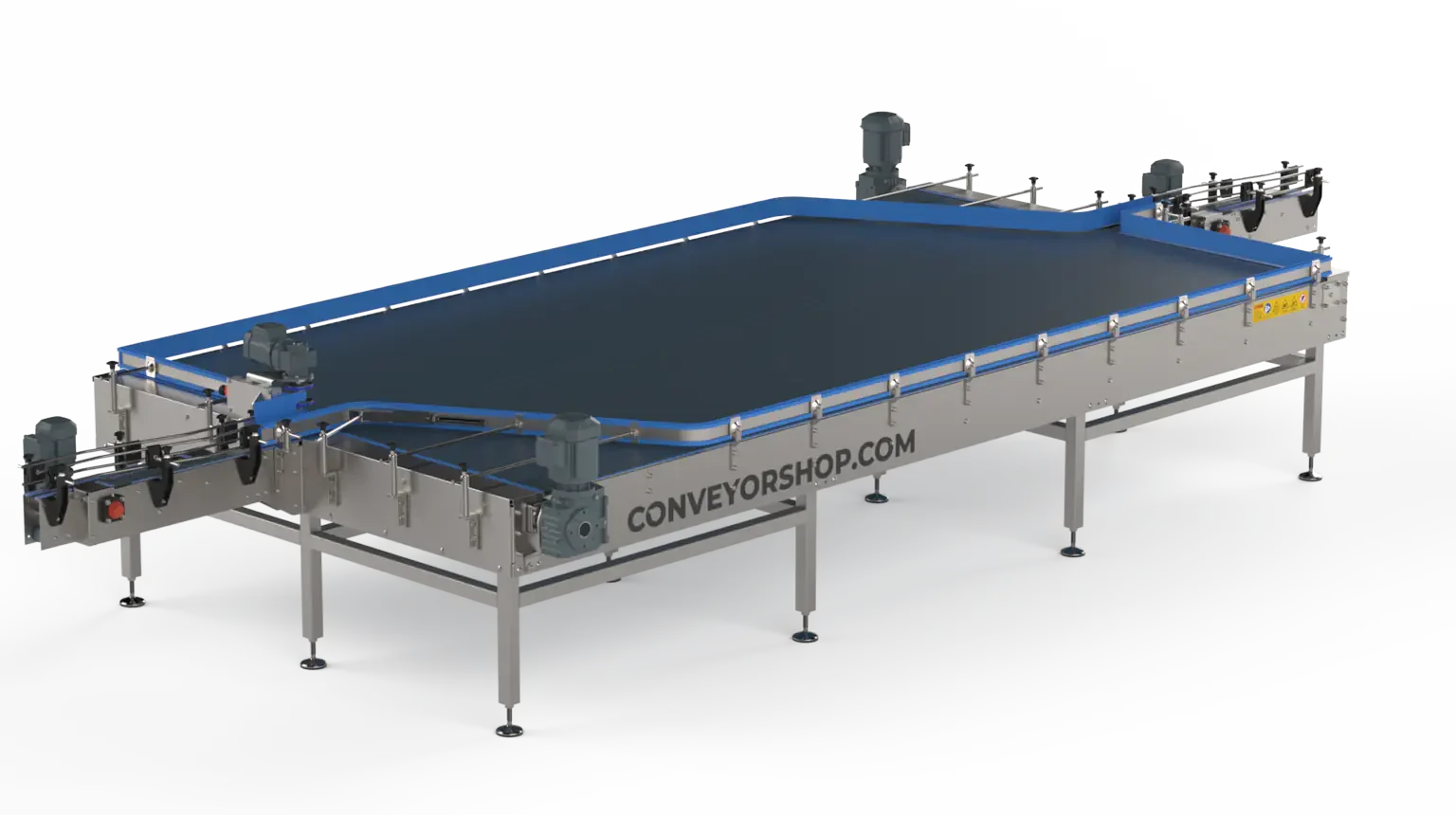
Our base designs are a bi-directional and a recirculating accumulation table, up to 3000 mm wide. Both can be configured online for an estimated price.
We can supply the accumulation system together with connecting conveyors to fit your existing line.
Products in this category
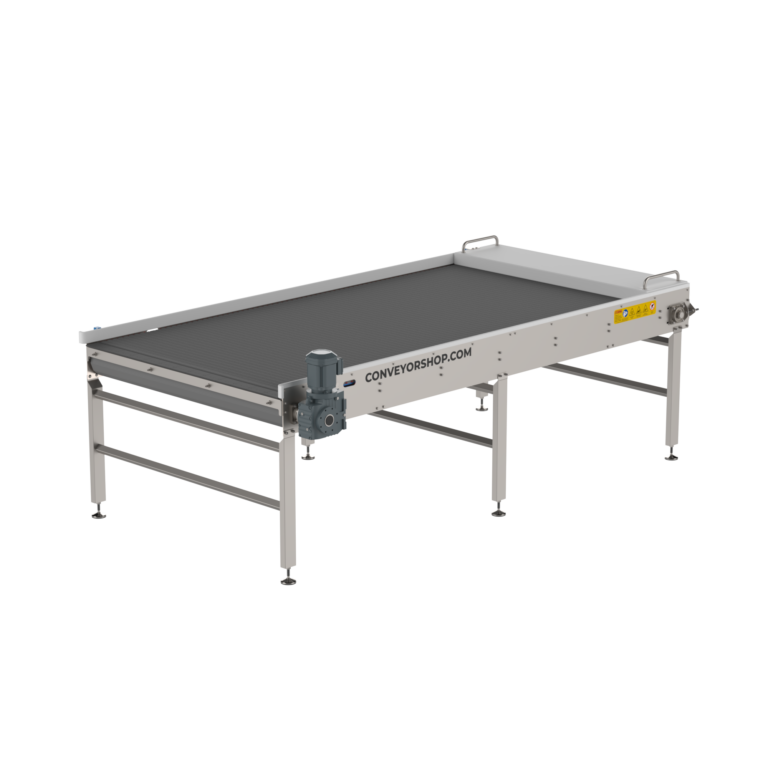
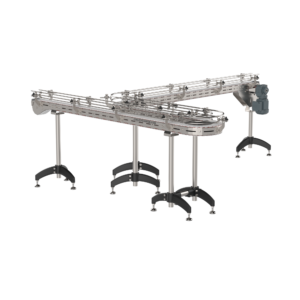
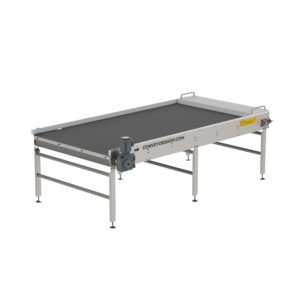
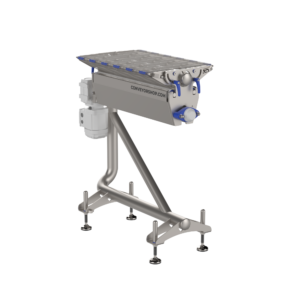
Bi-directional accumulation table
Accumulation table for mass flow buffering. It stores cans or containers when the line backs up and returns…
Open configurator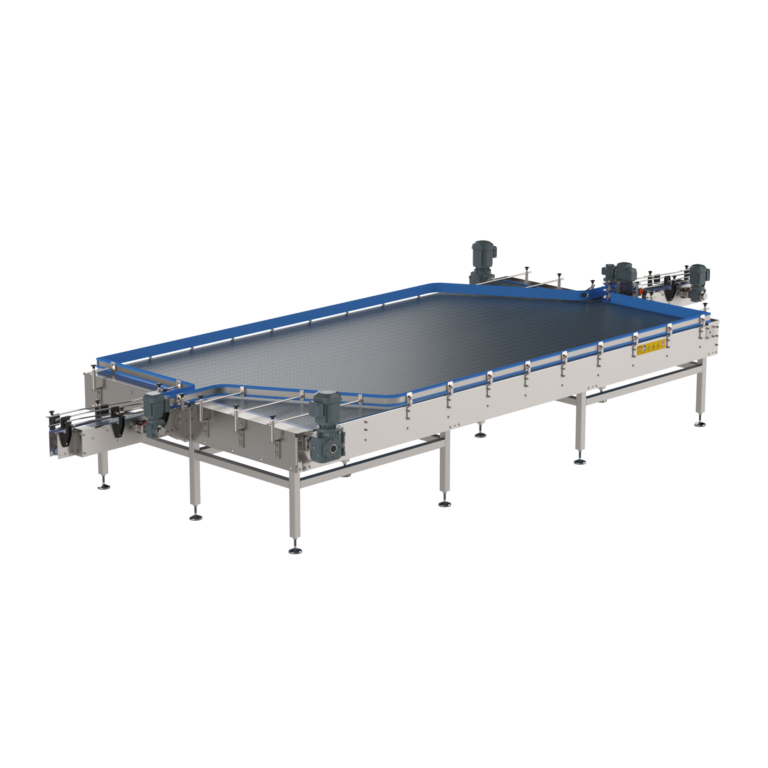
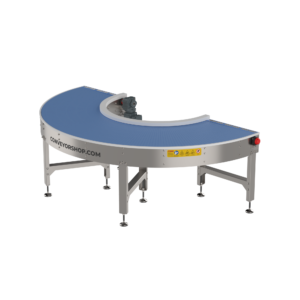
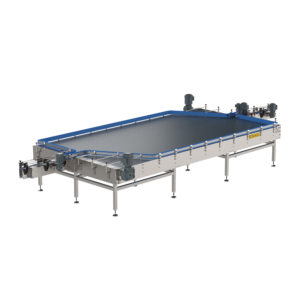
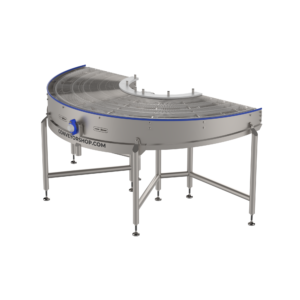
Recirculating accumulation table
Stainless steel recirculating accumulation table for cans, bottles and jars. Product passes straight through in normal running, and…
Open configuratorNot listed here?
Not all conveyor types are shown. We design and build custom solutions for any requirement.
Contact usCapacity calculator
What is an accumulation conveyor?
An accumulation conveyor holds product between two machines when the downstream machine stops or slows. It is also called an accumulation table, buffer table or buffer conveyor. When the line clears, the stored product is returned at the rate the downstream machine can take.
On a filling line, the filler is usually the machine that must keep running. A labeller roll change, a jam in the packer or a pallet change downstream can stop it within seconds. An accumulation table covers these short stops and gives operators time to clear them.
Accumulation tables suit round and stable containers: cans, bottles, jars and tubs, full or empty. They are not a fix for a machine that is simply too slow. If the downstream machine runs below the filler speed for long periods, the table fills up and the line stops anyway.

Accumulation conveyor types we build
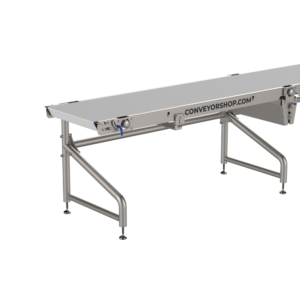
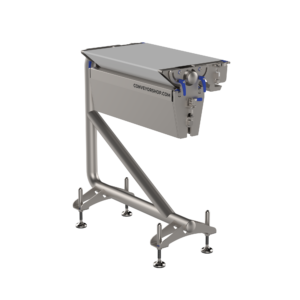
All types are built on stainless steel frames with plastic chains, guide rails set to your container and fill level sensors. The bi-directional and recirculating tables have their own product pages.
Bi-directional accumulation table
Sits beside the main line. Takes product onto the table when the line backs up and returns it when downstream capacity is free. Large buffer in a small footprint. (Bi-directional accumulation table)
Recirculating accumulation table
Sits in the line. Product passes straight through in normal running and circulates on the table without back pressure when the outfeed is full. (Recirculating accumulation table)
Multi-lane accumulation conveyor
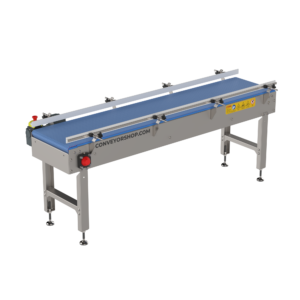
Chains are side by side (usually 3-5 lanes), all running in the same direction. Product accumulates in mass flow along the line and leaves in the order it arrived.
Accumulation turntable
Rotating stainless or PE disc at the end or start of a line. Collects or releases product for manual packing, or feeds loose containers into a single lane.
Frame & material options
Painted
Painted carbon steel for dry areas, for example empty container handling and end of line. Our own workshop handles stainless steel only. Carbon steel frames are fabricated by an outside supplier and assembled by us, which can mean a longer lead time.
Stainless steel
Our standard build. AISI 304 frame, guide rails and sensor brackets. Suitable for filled and closed containers in areas cleaned regularly but not washed down every shift.
Washdown
For bottling and canning areas cleaned with water and foam. AISI 304 frame, AISI 316 on request. Gearmotors with the sanitary package: washdown coating and NSF H1 registered oil. Chain fields give better access for cleaning under the table than a closed belt.
Typical configuration options
| Parameter | Typical options |
|---|---|
| Accumulation type | Bi-directional table, recirculating table, multi-lane conveyor, turntable |
| Containers | Aluminium cans, PET and glass bottles, jars, tubs. Full or empty |
| Table width | Up to 3000 mm |
| Table length | Built to the required buffer. Maximum length depends on the load carried |
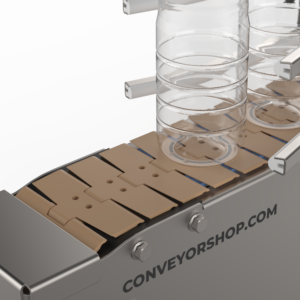
| Chain | Raised rib chain with comb transfers, low friction flat top chain, low back pressure chain |
| Infeed and outfeed | Any side on recirculating tables. Motorised roller and pneumatic gate at the outfeed on request |
| Guide rails | Adjustable to the container diameter and height |
| Sensors | Fill level sensors on the guide rails to load, hold and unload the table |
| Frame material | AISI 304 as standard. AISI 316 or painted steel on request |
| Drive | Nord Drivesystems as standard, SEW-Eurodrive quoted separately. Sanitary package with NSF H1 oil where needed |
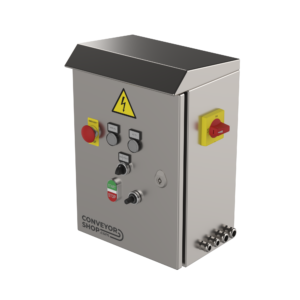
| Control | Motor wiring, sensors and control are not included. Electrical panel on request |
| Environment | Dry, wet or washdown production areas |
Industries & applications
Accumulation tables are used wherever a filler or process machine must keep running through short stops downstream.
Breweries and can lines
Between the filler and seamer, pasteuriser, labeller and packer. Empty can buffering after the depalletiser.
Water and soft drinks
PET bottles between the filler, capper, labeller and shrink wrapper.
Wine and spirits
Glass bottles before labelling and boxing, where label changes stop the line several times a shift.
Food jars and tubs
Sauces, preserves and spreads between filling, capping, labelling and case packing.
Dairy
Bottles and tubs between filling, capping and secondary packaging.
Personal care and household
Bottles and jars of different sizes on lines with frequent format changes.
Why get accumulation conveyors from us
Built to your line
We size the buffer from your line speed and the stops you need to cover.
Price online
Configure the width and length of both tables for an instant estimated price. Final quote will be checked by us.
Pre-assembled & tested
Every conveyor is assembled and test-run at our workshop before shipping.
Standard components
Belts, sprockets and wear strips come from several established manufacturers, for example Movex or Rexnord. Spare parts stay available.
Common questions
Divide the number of containers the table holds by the line speed. A table holding 1500 cans on a line running 300 cans per minute covers a 5-minute stop. Typical buffers between a filler and labeller cover 2-5 minutes.
A bi-directional table sits beside the line and stores product when the line backs up. The last containers in are the first out. A recirculating table sits in the line. Product passes straight through, and when the outfeed is full, it circulates on the table without stopping.
FIFO (first in, first out) returns product in the order it arrived. Multi-lane conveyors work this way. FILO (first in, last out) returns the last containers first, as on a bi-directional table. FILO is fine for most products, but not where batch order must be kept, for example for traceability between two batches.
Empty PET bottles are light and tip over easily, especially when tall. Short and stable bottles run on our tables. Tall empty bottles need a test with your bottle first, or a different conveyor type, such as a vacuum chain conveyor or air conveyor.
No. The tables come with gearmotors and guide rails. Fill level sensors, motor wiring and control are quoted separately. We can supply a stainless electrical panel or integrate the table into your line control.
Container type, diameter, height and weight, full or empty. Line speed in containers per minute. Required buffer in containers or minutes. Available floor space and infeed height. The configurators give an estimated price for width and length.
Standard lead time is 6-8 weeks for a base design with changes to size and guide rails, and 8-12 weeks where custom parts need redesign. The full process is on How to order.