
Modular plastic belt conveyors
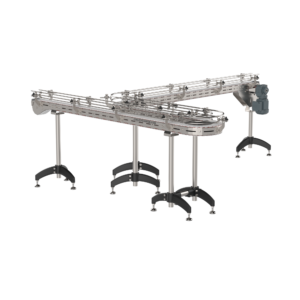
Our modular plastic belt range includes straight conveyors with nosebar transfers, compact zero-tangent curves and sideflexing conveyors that combine straight and curved sections. We configure belt type, width and layout around your products and operating conditions.
Products in this category
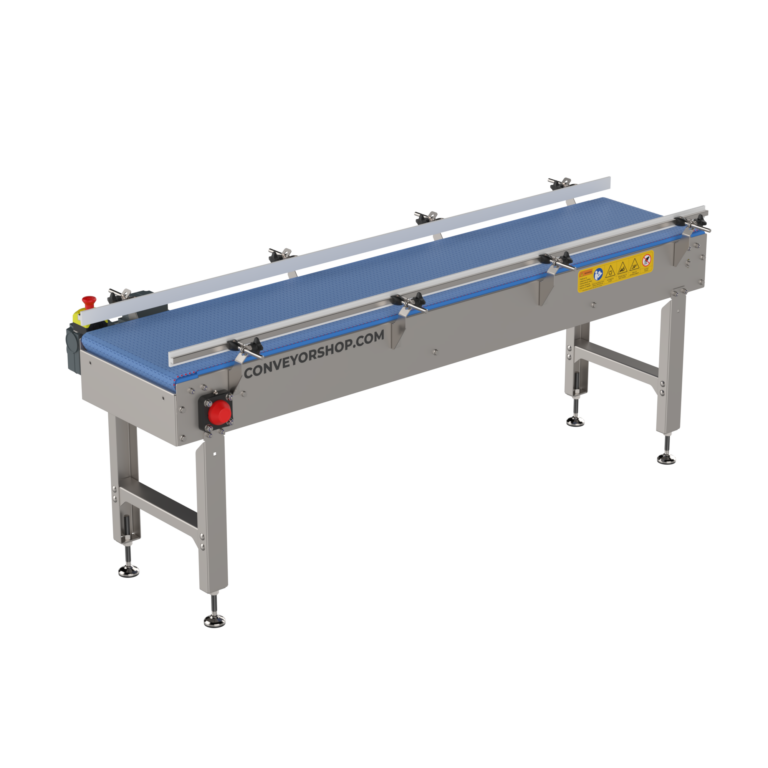
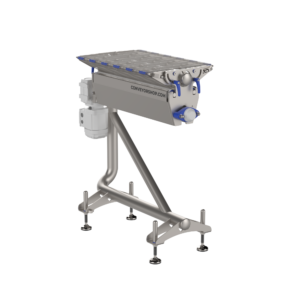
FlatTop conveyor
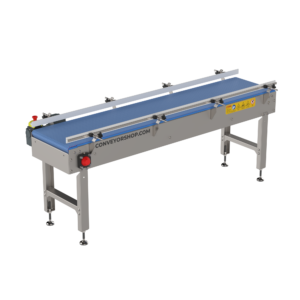
Nosebar modular chain conveyor with flat-top plastic chain. Configure your dimensions to see price.
Open configurator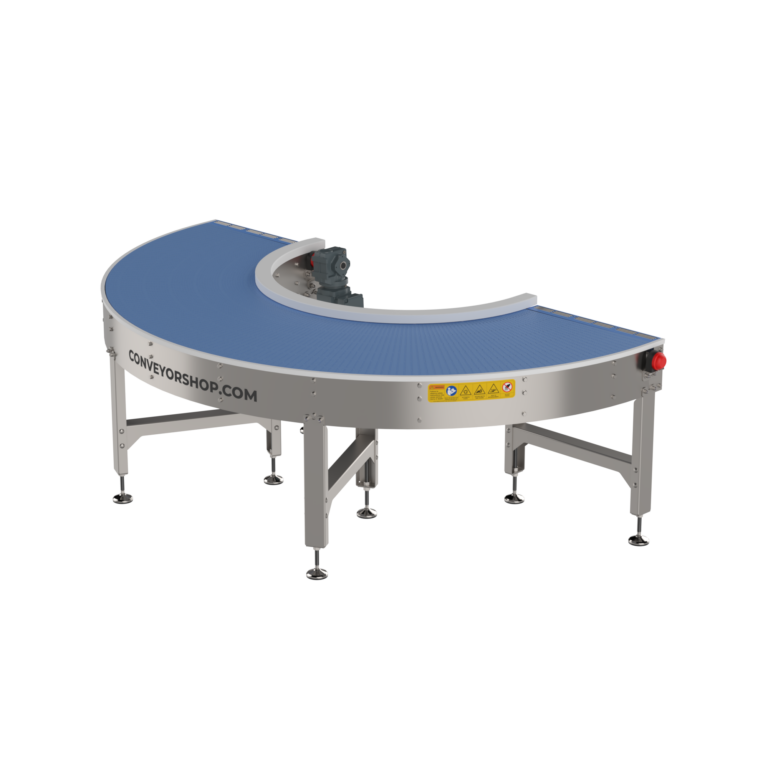
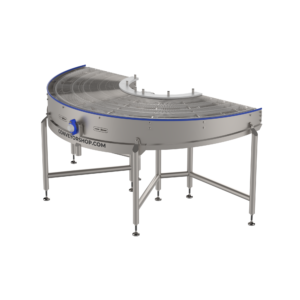
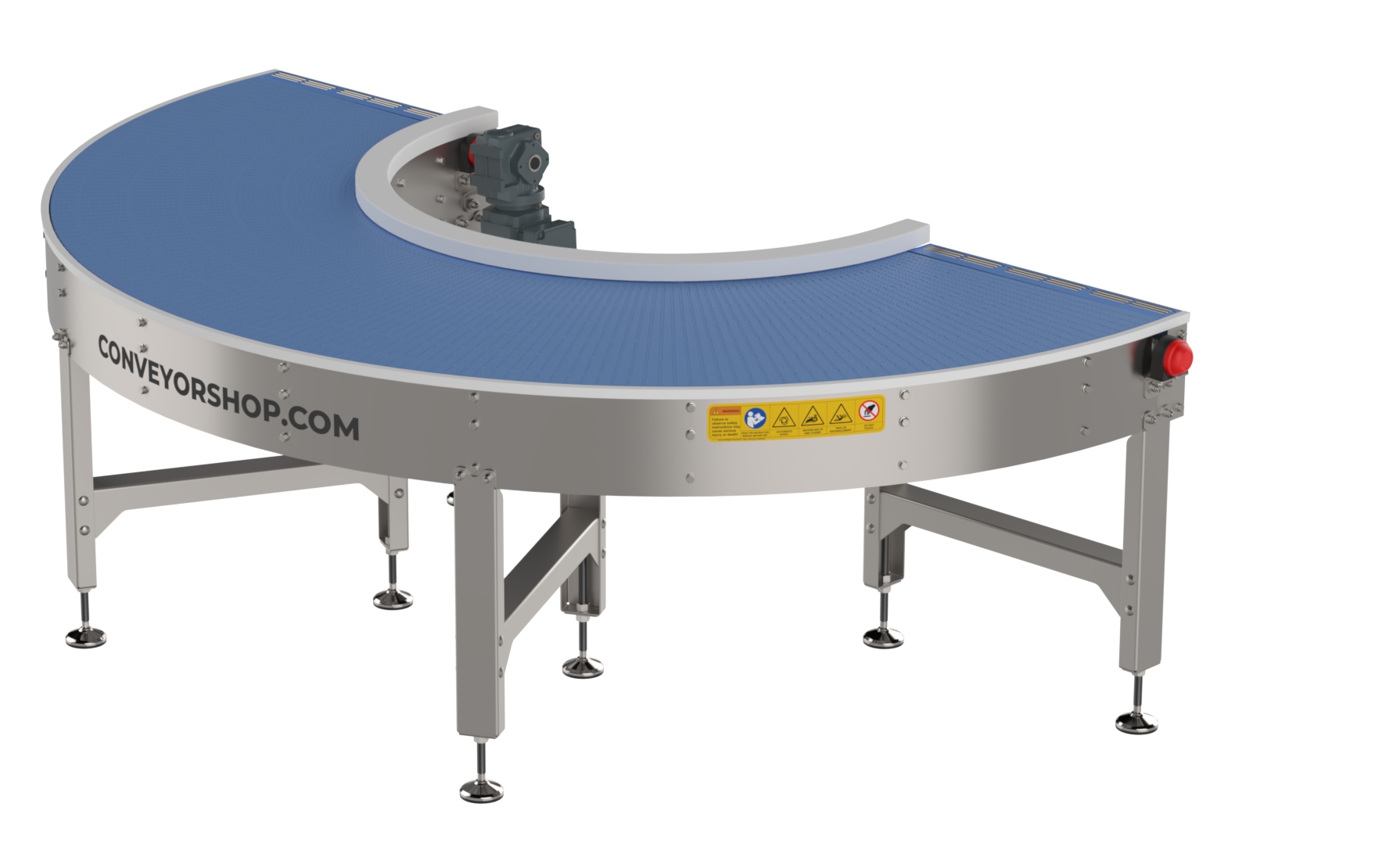
Curve conveyor
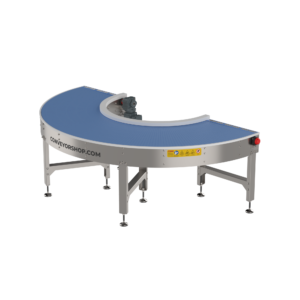
Zero-tangent modular plastic chain curve conveyor. Wide selection of radius, chain width and angle combinations
Open configuratorNot listed here?
Not all conveyor types are shown. We design and build custom solutions for any requirement.
Contact usWhat is a modular plastic belt conveyor?
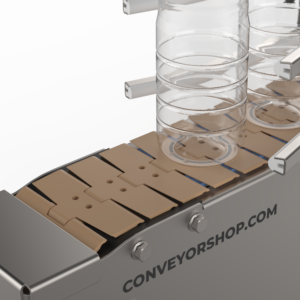
A modular plastic belt is assembled from injection-moulded plastic modules joined by hinge rods. The modules are laid in a brick pattern, so the belt can be built to almost any width. It is also called a modular belt, plastic modular belt or, on narrow conveyors, flat top chain.
Sprockets on the drive shaft engage the underside of the belt. The drive is positive: the belt does not slip when wet and does not need tracking like a fabric belt. A damaged module can be replaced without replacing the whole belt.
A modular belt conveyor is the usual choice for wide conveyors, heavier loads, products with sharp edges or impact, and curves without a transfer in between. It runs packaged food, cases, trays, crates and mass flow of bottles and cans.
It is less suited to small, soft or sticky unpackaged products. Product residue collects in the hinges, which take longer to clean than a smooth belt. For those products, a sanitary belt conveyor with a PU belt is usually the better choice. For a single lane of bottles or cans up to about 300 mm wide, a modular plastic chain conveyor costs less.
Modular belt conveyor types we build
FlatTop conveyor
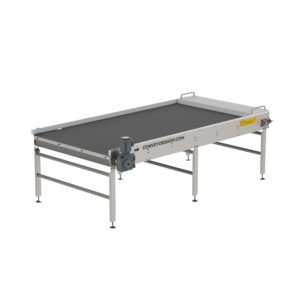
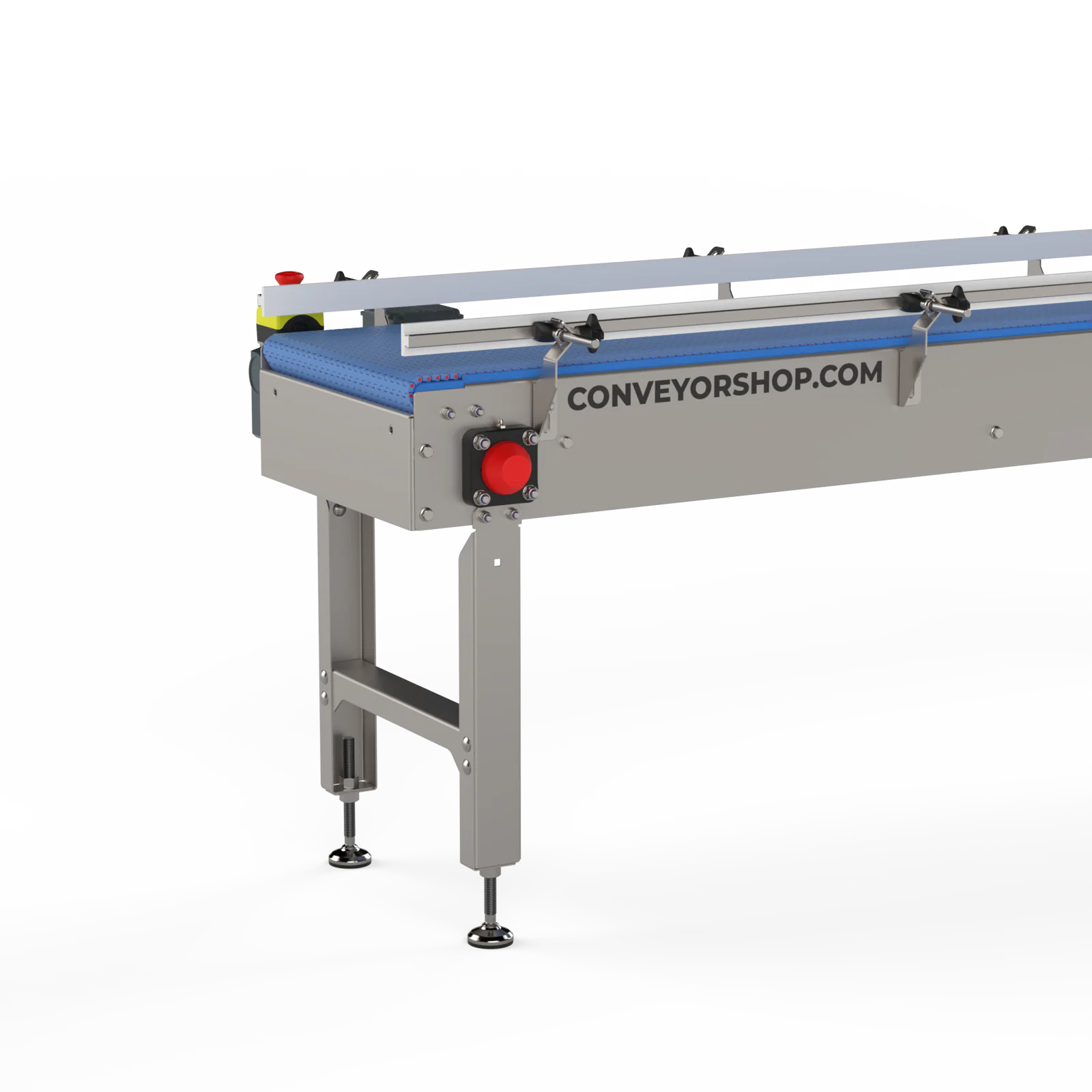
Straight conveyor with a nosebar transfer at both ends. 85-1530 mm wide in 85 mm steps, priced online for lengths of 1-6 m.
Zero-tangent curve conveyor
Turns product 30° to 180° with no straight section before or after the curve. Product keeps its orientation through the turn.
Accumulation tables
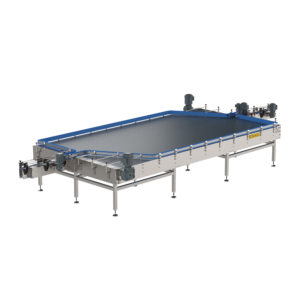
Wide raised rib belt with comb transfers, up to 3000 mm wide. Buffers cans and bottles when the line stops downstream.
Incline and decline conveyor
Flights and side walls on the belt carry product between working heights. A GripTop belt with a rubber surface for shallow inclines.
Choosing the modular belt
The belt decides how the product runs, how tight the transfer is and how the conveyor is cleaned. We select it from your product, temperature and cleaning method, and we are not tied to one belt manufacturer.
Belt surface
Flat top for most packaged products. Open grid for drainage and airflow. Raised rib with comb transfers on accumulation tables. Low back pressure rollers where products accumulate. GripTop for inclines.
Pitch and transfer
Pitch is the distance between hinge rods, typically 12.7-50.8 mm. A small pitch runs over a nosebar for a tight transfer of small products. A larger pitch carries heavier loads.
Belt material
Low-friction acetal (POM) for packaged products and accumulation. Polypropylene (PP) for chemical resistance and hot water. Polyethylene (PE) for frozen product and impact at low temperatures. FDA-compliant materials as standard.
Curve belt
A zero-tangent curve uses a belt designed to turn. The inner edge runs on roller bearings, so the curve takes high speeds and loads.
Frame & material options
Painted
Painted or galvanized carbon steel for dry areas and end-of-line packaging. Our own workshop handles stainless steel only, to avoid iron contamination. Carbon steel frames are fabricated by an outside supplier and assembled by us, which can mean a longer lead time.
Stainless steel
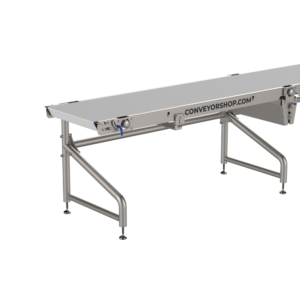
Our standard build. AISI 304 frame, side guides and fasteners for packaged products and areas cleaned regularly but not washed down every shift. Some areas may need partial disassembly for a full clean.
Washdown
For wet areas and lines washed down every shift. AISI 304 frame with open access to the belt underside, closed bearing housings in reinforced polyamide and gearmotors with the sanitary package: washdown coating and NSF H1 registered oil. AISI 316 on request. The belt comes off by pulling a hinge rod.
Typical configuration options
| Parameter | Typical options |
|---|---|
| Conveyor type | Straight with nosebar or sprocket ends, zero-tangent curve, accumulation table, incline, decline |
| Product types | Packaged food, cases, cartons, trays, crates, shrink packs, bottles and cans in mass flow |
| Belt width | FlatTop 85-1530 mm in 85 mm steps. Curves 200-1600 mm. Accumulation tables up to 3000 mm |
| Conveyor length | FlatTop 1.0-6.0 m in the configurator. Longer where the allowable belt pull is not exceeded |
| Curve | Inside radius 600-2000 mm. 30°, 45°, 60°, 90°, 135°, 180° and special angles |
| Belt surface | Flat top, GripTop, low back pressure, raised rib, open grid |
| Belt material | Low-friction acetal (FDA compliant) as standard. PP and PE on request |
| Transfer ends | Nosebar, sprocket, comb transfer. On curves: no rollers, plastic, stainless or driven rollers |
| Frame material | AISI 304 as standard. AISI 316, painted or galvanized steel on request |
| Bearings | Closed housings in reinforced polyamide |
| Drive | Nord Drivesystems as standard, SEW-Eurodrive on request. Sanitary package with NSF H1 oil where needed |
| Speed | Fixed speed or variable speed with frequency inverter |
| Environment | Dry, wet or washdown production areas |
Industries & applications
Modular belt conveyors run where the load is wide or heavy, where the line turns, or where the belt must not slip in a wet area.
Beverage and can lines
Mass flow of bottles and cans, accumulation tables and wide transfers between the filler, pasteuriser, labeller and packer.
Dairy
Cups, cartons and multipacks between filling, cartoning and case packing. Stainless frames for daily washdown.
Bakery and confectionery
Packed bread, cakes and confectionery between flow wrappers, case packers and palletisers.
Meat and poultry packaging
Sealed trays and vacuum packs from the tray sealer through the checkweigher, metal detector and labeller.
End of line
Cases, crates and shrink packs to the palletiser. Wide belts carry several lanes or turn product on curves.
Chemicals and non-food
Plastic belts resist oils and many chemicals that damage fabric belts. Painted or stainless frames depending on the area.
Why get modular belt conveyors from us
Built to your line
Width, belt type, transfer ends and guides are chosen for your products and for the machines on both sides.
Price online
Configure the FlatTop conveyor for an instant price. Curves and other layouts are quoted from your dimensions, typically within 2-3 days for simple projects.
Pre-assembled & tested
Every conveyor is assembled and test-run at our workshop before shipping.
Standard components
Belts, sprockets and wear strips come from several established manufacturers, for example Movex or Rexnord. Spare parts stay available.
Common questions
A plastic chain has a single hinge in the centre and is typically up to about 300 mm wide. A modular plastic belt has a hinge across its full width and is built from modules to almost any width. On narrow single-lane conveyors, chain is usually cheaper. On wider conveyors, modular belt is usually cheaper. See modular plastic chain conveyors.
Choose a modular plastic belt for wide or heavy loads, sharp-edged products, curves and wet areas where a fabric belt would slip. Choose a PU belt for small, soft or sticky unpackaged products that need a smooth, closed surface. A modular belt costs more than a PU belt on a short straight conveyor and makes more noise. See belt conveyors.
Yes. The belt materials are FDA compliant and many belt types are designed for direct food contact. The hinges are harder to clean than a smooth PU belt, so we recommend adding CIP washing nozzles. For unpackaged product, we select a belt with open hinges and confirm the cleaning method with you before the design is fixed.
Low-friction acetal is our standard for packaged products and accumulation. Polypropylene suits hot water and many chemicals. Polyethylene stays impact resistant in freezers. As a guide, acetal works from about −40 to +90 °C, PP from about +5 to +100 °C and PE from about −70 to +65 °C. Exact limits depend on the belt manufacturer.
It depends on the end. A nosebar end with a small-pitch belt gives the tightest transfer, which is why our FlatTop conveyor has nosebars at both ends. A sprocket end leaves a larger gap. For very small products, a micro transfer conveyor can bridge the gap.
A conventional curve needs straight sections before and after the turn. A zero-tangent curve starts and ends the turn at the transfer, so the footprint is smaller and the product keeps its orientation. Our curves run from 30° to 180° with an inside radius of 600-2000 mm.
The belt comes off by pulling a hinge rod. Damaged modules are replaced one by one. The belt runs on wear strips and needs no tracking adjustment. On washdown builds, the frame can have cleaning holes on the side frame.
Standard lead time is 6-8 weeks for a base design with changes to size and guide rails, and 8-12 weeks where custom parts need redesign. For a quote we need the product dimensions and weight, throughput, conveyor widths and heights, and what feeds and receives the product. The full process is on How to order.