
Wire mesh conveyors
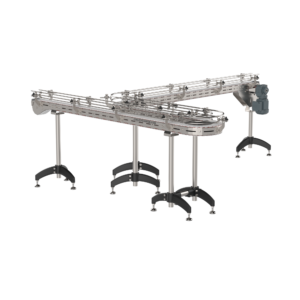
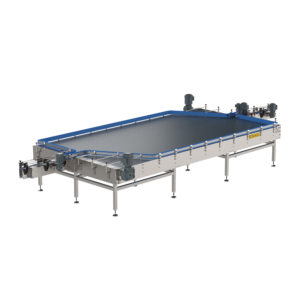
We build stainless steel wire mesh conveyors for food lines where the product needs airflow, drainage or a tight transfer. Our base designs are a wire mesh curve conveyor with a non-collapsing turning belt and a wire mesh micro transfer with small nose rollers.
Every order is built to the dimensions of your line.
Products in this category
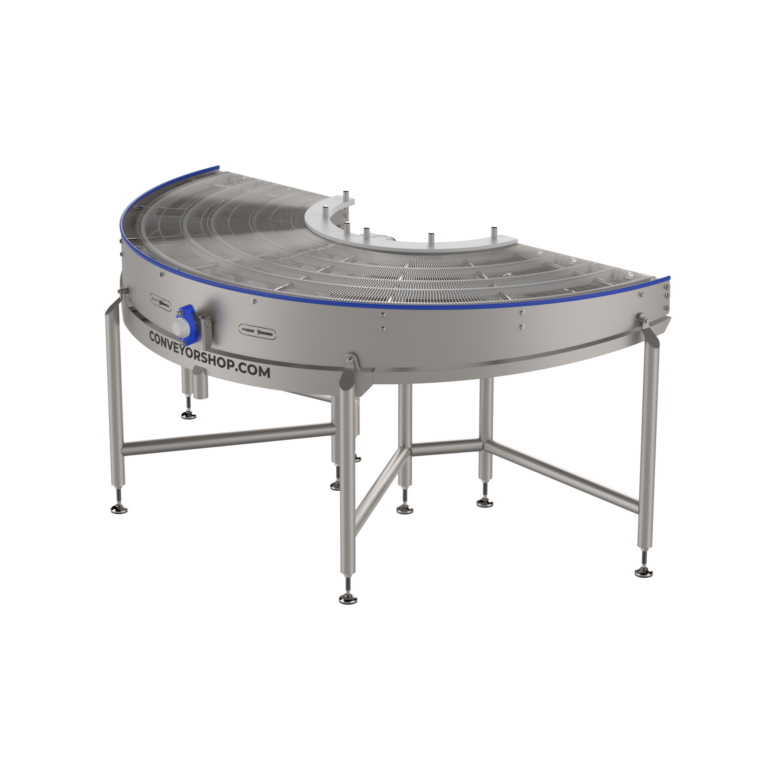
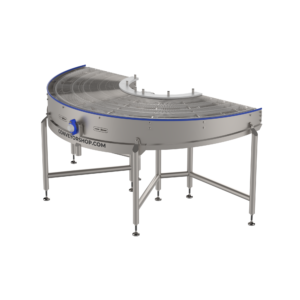
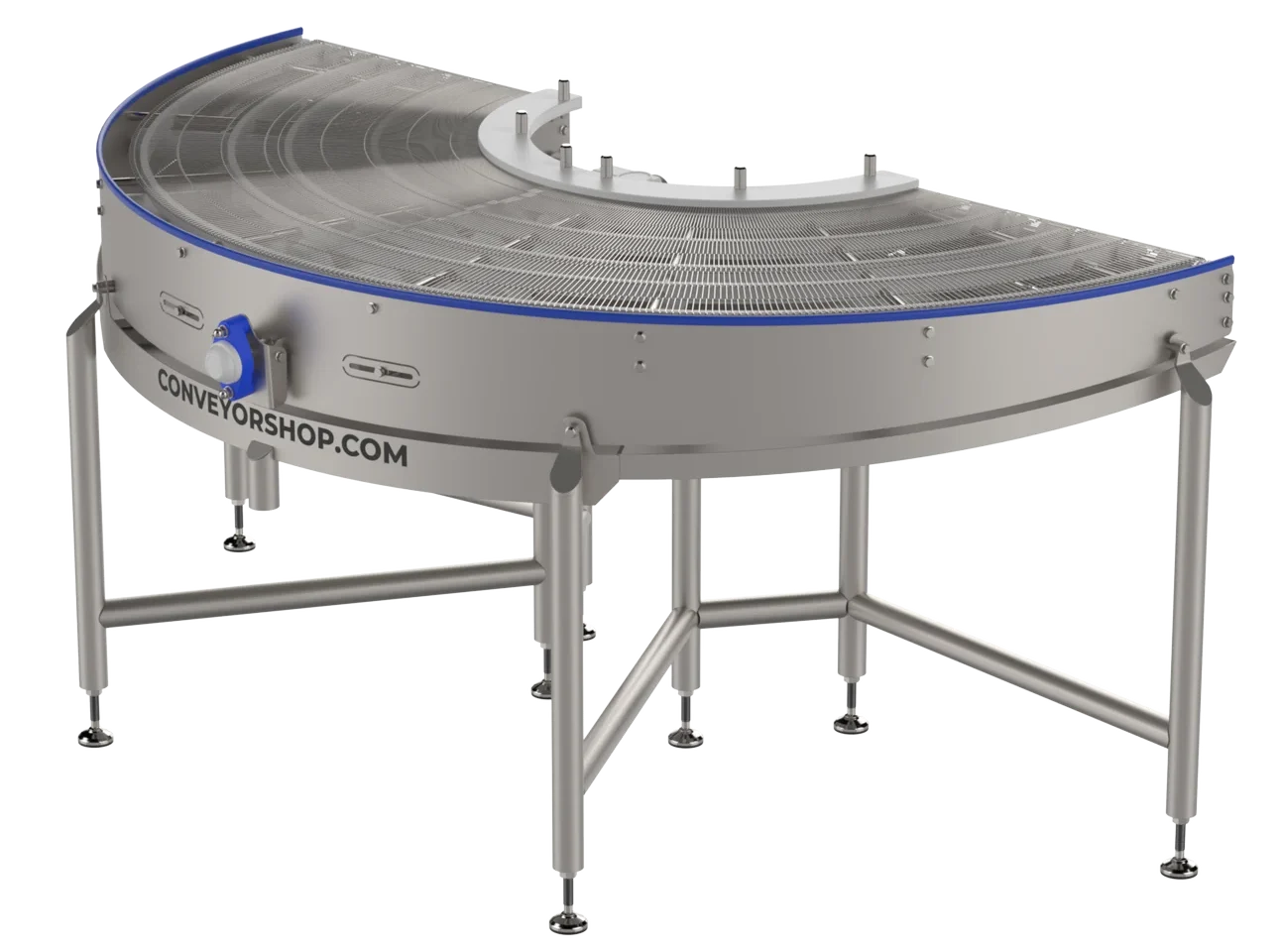
Wire mesh curve conveyor
Stainless steel wire mesh curve conveyor for food processing lines. Built to your required dimensions.
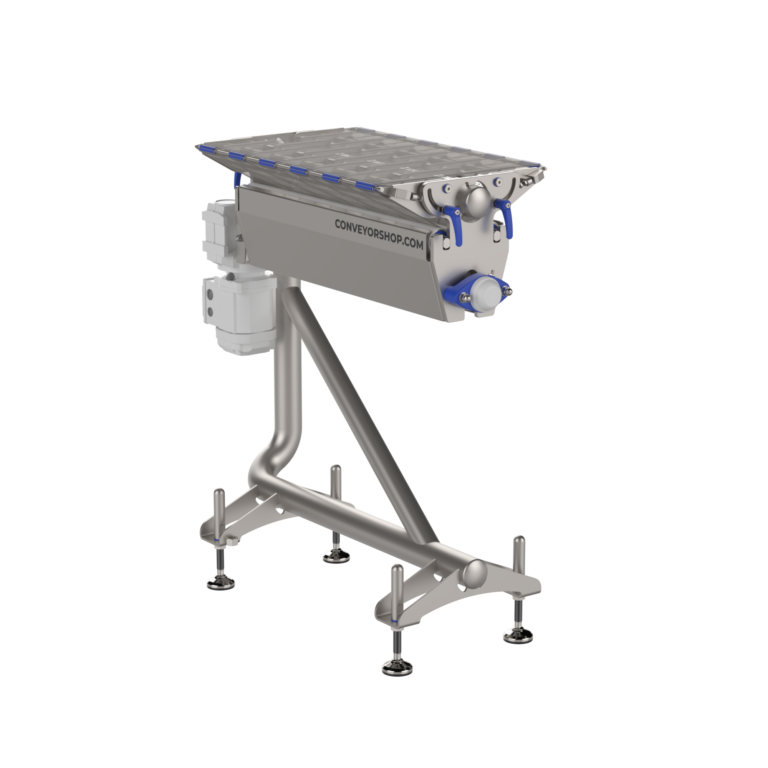
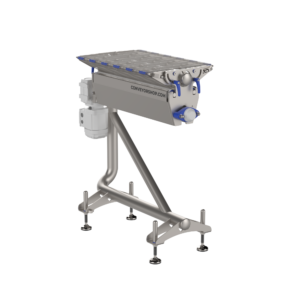
Wire mesh micro transfer
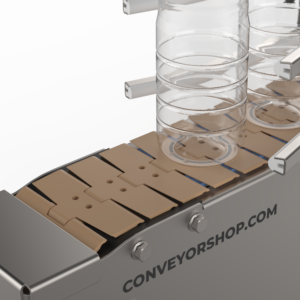
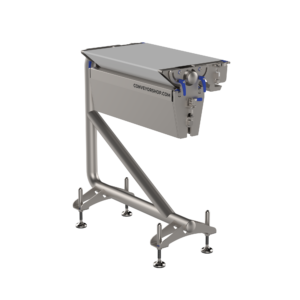
Wire mesh transfer conveyor for bridging the gap between conveyors with large diameter pulleys.
Open configuratorNot listed here?
Not all conveyor types are shown. We design and build custom solutions for any requirement.
Contact usWhat is a wire mesh conveyor?
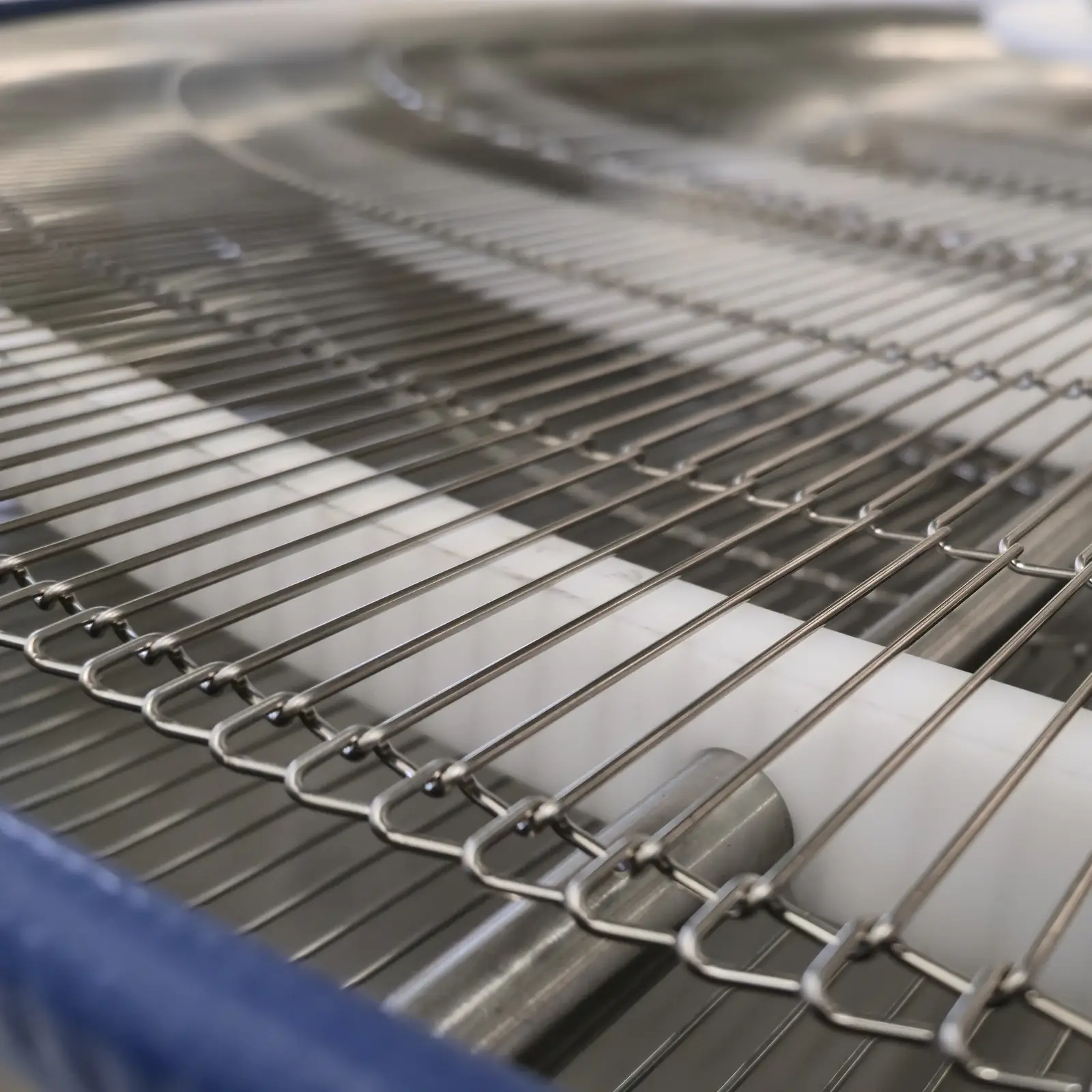
A wire mesh conveyor carries products on an open belt woven from stainless steel wire. The belt is also called a wire belt, mesh belt or wire mesh chain. Air, water, oil and crumbs pass through it instead of collecting under the product. Depending on pitch and wire diameter, a wire mesh belt is typically 70-85% open.
The belt is driven by sprockets that engage the mesh, so it does not slip or need tracking like a fabric belt. Stainless steel tolerates hot and frozen products, steam and alkaline cleaning agents.
A wire mesh belt conveyor is the usual choice when the product is cooled, dried, drained, coated or rinsed while it moves. Typical products are baked goods, fried and coated products, glazed snacks, cooked meat, washed vegetables and frozen portions.
It is less suited to small, soft or sticky products that press into the mesh, to heavy loads and to accumulation. For those, a sanitary belt conveyor or a modular plastic belt conveyor is usually the better choice.
Wire mesh conveyor types we build
All our wire mesh conveyors are built in AISI 304 stainless steel for wet and washdown areas. The curve and the micro transfer have their own product pages. Straight and incline conveyors vary too much between projects for a standard model, so we design them for each line.
Wire mesh curve conveyor
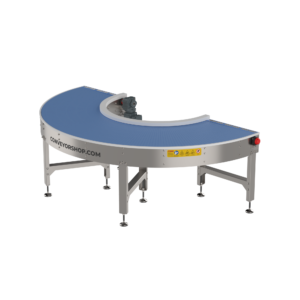
Tapered-pitch turning belt for 45°, 90° and 180° turns, inside radius 406-800 mm. The belt does not collapse on the inside of the turn, so products keep their spacing and orientation.
Wire mesh micro transfer
Short conveyor with small nose rollers at both ends. Bridges the gap after large drums and sprockets, from about 200 mm between rollers.
Straight wire mesh conveyor
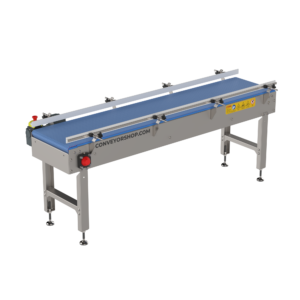
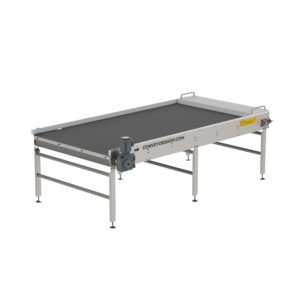
Wire mesh belt on a stainless frame for cooling, draining and inspection sections, and for infeed and outfeed of process machines.
Incline and decline conveyor
Wire mesh conveyor between two working heights. Flights woven into the belt hold the product where it would slide back.
Choosing the wire mesh belt
The belt decides what the conveyor can carry. We select it from your product dimensions, weight and temperature, and we are not tied to one belt manufacturer.
Straight-running belt
Formed wires woven into an open grid, 0.9-2.8 mm wire. Smooth top surface, high open area and low weight. Used on straight conveyors and micro transfers.
Tapered-pitch turning belt
The pitch is smaller on the inside of the turn than on the outside. The belt stays flat and open through the curve instead of folding together on the inner edge.
Mesh pitch
The pitch is the distance between wires, typically 4-25 mm. As a rule, the smallest product dimension should be at least two to three pitches.
Belt support
Open PE wear strips for maximum drainage. A closed PE top where small products could fall through or catch in the mesh. A closed stainless steel top for some meat applications.
Frame & material options
AISI 304 washdown
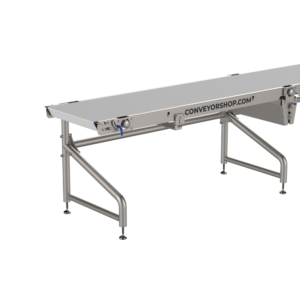
Our standard build. Fully welded tubular frame or open sheet metal frame in AISI 304 with a bead-blasted finish. The open design lets you wash the belt underside and the frame. The belt comes off without tools, except on very short conveyors.
AISI 316 washdown
For salt, brine, acids and chlorinated cleaning agents, for example on fish, seafood and pickling lines. Frame, shafts and fasteners in AISI 316, belt in AISI 316 on request. This comes with an increased cost.
Hot and frozen product
For products above about 80 °C or below freezing we replace PE parts with stainless steel belt supports and fully stainless bearings. The drive and lubricant are selected for the temperature range.
Typical configuration options
| Parameter | Typical options |
|---|---|
| Conveyor type | Straight, curve 45°, 90° or 180°, micro transfer, incline, decline |
| Product types | Baked goods, fried and coated products, glazed snacks, cooked meat and poultry, washed vegetables, frozen portions |
| Belt type | Straight-running wire mesh belt, tapered-pitch turning belt on curves |
| Belt material | Stainless steel 1.4310 (AISI 302) or AISI 316 |
| Inside radius | 406-800 mm as standard. Other radius to width ratios also possible |
| Belt width | 254-1270 mm on curves. The widest belts are limited to 90° turns. Straight conveyors built to the line |
| Mesh pitch | Typically 4-25 mm, selected by product size |
| Open area | Typically 70-85%, depending on pitch and wire diameter |
| Speed | Curves typically 3-11 m/min at the inside edge. Fixed or variable speed with frequency inverter |
| Load | Curves up to about 12 kg/m². Straight conveyors depend on belt and length |
| Transfer ends | Small nose rollers, 25-38 mm on curves |
| Belt support | Open PE wear strips, closed PE top or closed stainless steel top |
| Drive | SEW-Eurodrive gearmotor, painted or stainless steel. NSF H1 registered oil as standard. |
| Bearings | Technopolymer housings with NSF H1 grease, fully stainless on request |
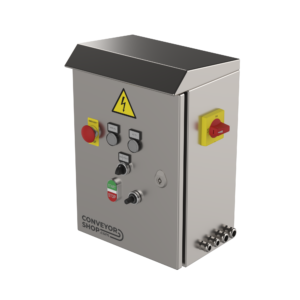
| Extras | Hinged transparent covers, drip trays, CIP nozzles, side guides, lane fill sensor, lockable castors, electrical panel |
| Environment | Wet, washdown, hot or chilled production areas |
Industries & applications
Wire mesh conveyors are used where the product is cooled, heated, drained or rinsed while it moves.
Bakery
Bread, buns and pastries from the oven to cooling, slicing and packing. Heat and steam leave the product through the belt instead of condensing under it.
Fried and coated products
Draining oil after the fryer, and excess batter, crumb or chocolate after coating and enrobing machines.
Dairy and chilled snacks
Glazed and unglazed dairy snacks between forming, glazing, freezing and packing.
Meat and poultry
Cooked and grilled products between ovens, chillers and packing machines. Open frames for daily washdown.
Fruit and vegetables
Dewatering after the washer, before cutting, freezing or packing. Water runs off through the belt.
Frozen food
Frozen portions in and out of freezers. Stainless steel stays stable at freezer temperatures where some plastics turn brittle.
Why get wire mesh conveyors from us
Built to your line
Width, radius, turn angle and transfer ends are chosen for your products and for the machines on both sides.
Hygienic design
Open stainless frames, belts that come off without tools, and bearings and gearmotors with NSF H1 lubricants.
Pre-assembled & tested
Every conveyor is assembled and test-run at our workshop in Estonia before shipping.
Not tied to one supplier
We buy wire mesh belts, sprockets, bearings and gearmotors from several established manufacturers, so spare parts stay available.
Common questions
A wire mesh conveyor moves products on an open stainless steel belt. It is used when air, heat, water or oil must pass through the belt while the product moves: cooling after an oven, draining after a fryer or washer, and coating, glazing, drying or freezing.
Choose wire mesh when the process needs an open belt, or when the product is hot or frozen. Choose a modular plastic belt for heavier loads, impacts and accumulation. Choose a PU belt conveyor for small, soft or sticky products that need a closed surface.
Yes, if the mesh pitch is too large for the product. As a rule, the smallest product dimension should be at least two to three times the pitch.
Our standard inside radius is 406-800 mm, with belt widths from 254 to 1270 mm. Turns up to 180° are possible on most widths. Custom radius and width combinations are also possible.
Our curve conveyors use a tapered-pitch belt. The pitch is shorter on the inside of the turn and longer on the outside, so the belt does not fold together on the inner edge. Products keep their spacing and orientation, and the mesh stays open for airflow and cleaning through the whole turn.
Turning belts typically run at 3-11 m/min, measured at the inside edge, and carry up to about 12 kg/m². Straight wire mesh conveyors run faster, depending on the belt. Wire mesh is light to medium duty. For heavy loads, a modular plastic belt or a stainless steel chain is the better choice.
The stainless steel belt itself handles both hot and frozen products. The limit is usually set by the other parts. PE wear strips and technopolymer bearings are standard up to about 80 °C. Above that, or below freezing, we use stainless steel supports and bearings.
It depends on the nose roller diameter, which depends on the belt pitch. Our curves use 25-38 mm transfer rollers. The wire mesh micro transfer bridges the gap after a large drum or sprocket. For very small products that need a closed surface, a knife edge belt transfer is the better choice.
The open belt and open frame can be washed down from all sides. On our conveyors the belt comes off without tools, except on very short lengths. Side covers are removable, and CIP spray nozzles can be integrated where the belt is cleaned during production.
Standard lead time is 8-12 weeks for a base design with changes to size and options. We need the product dimensions, weight and temperature, the required capacity or belt speed, the turn angle and available space, and the details of the conveyors on both sides. The full process is on How to order.